Connection for eToken
This chapter describes how to connect using OAuth2 to be able to use logging in to eToken app, which provides electronic signing from a remote certificate store.
Creating a new connection
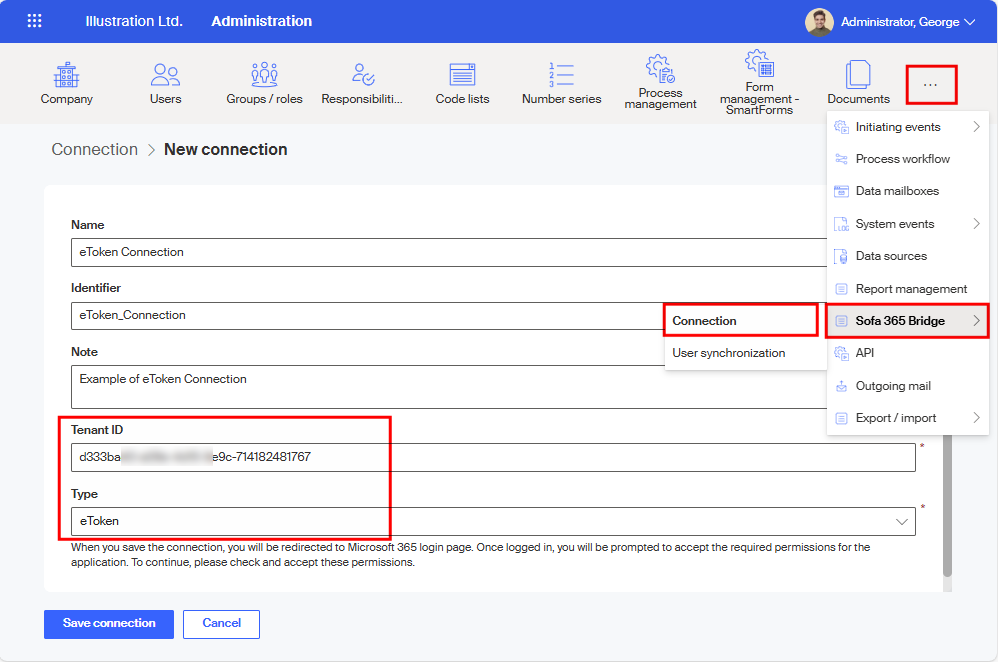
Start in the Administration window by clicking the Sofa 365 Bridge button and then select Connection from the menu.
In the toolbar of the Connection window, click + Add connection to Microsoft 365.
Fill out all mandatory entries in the New connection window.
-
In Name, enter the connection name that will be used when displaying the connection in lists.
-
The default Identifier is created from the Name, but you can adjust it to a preferred string.
Both these entries are used internally in Sofa and do not need to be unique. -
You can also enter any optional description in the Note field.
-
Copy the ID you have learned in chapter How to get organization’s Tenant ID to the Tenant ID field.
-
In Type, select eToken.
| Note the information: When you save the connection, you will be redirected to Microsoft 365 login page. After login, you will be asked to accept the required permissions for the app. To be able to continue, check and accept these permissions. |
Select Save connection.
Next, you are asked to authenticate the tenant.
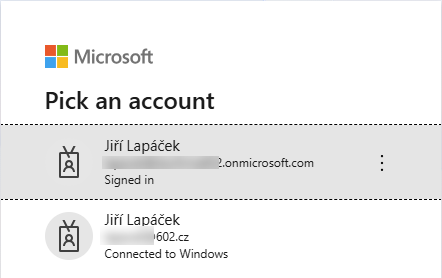
The dialog displays the requirements on permissions that you need to accept and allow so that the apps supporting OAuth can connect.
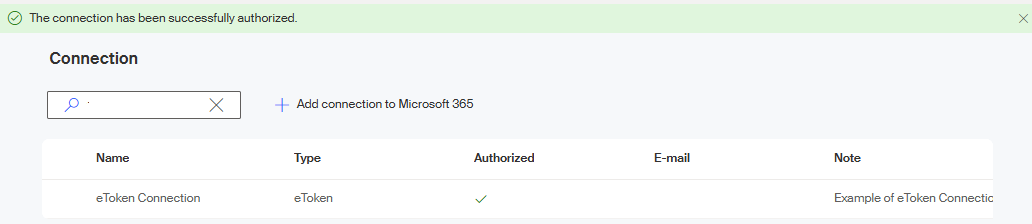
After selecting Accept, a new connection for eToken is created. If everything is in order, a green information strip is displayed with the message The connection has been successfully authorized.
Editing a connection
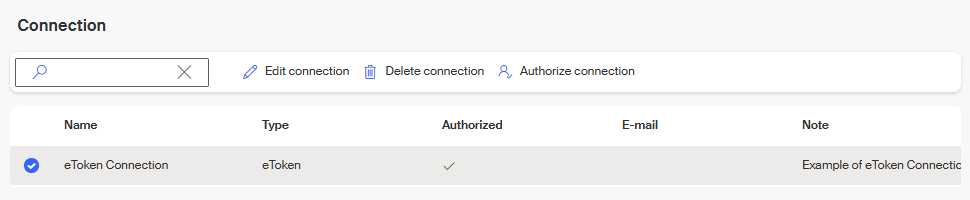
Click on a connection entry with the mouse to select it (a circle with a checkmark is displayed on the left) and a toolbar with three buttons is displayed in the upper part of the window.
-
Edit connection – opens the Connection for eToken window similar to the one where you created the connection. Only the Name and Note can be edited.
-
Delete connection – use this button to delete these connection settings permanently.
-
Authorize connection – tests and authorizes the connection again the same way as when creating a new connection.